

Custom flags are a simple way to make an event area, business entrance, exhibition stand, or outdoor space easier to identify. Unlike many forms of printed advertising, flags are designed to be seen from a distance and can work in locations where wall-mounted signs or banners are not practical.
For businesses considering flags printing dubai, the main question is not simply how a flag looks. Its size, shape, fabric, printing method, placement, and intended use can all affect how effectively it performs. Choosing these elements according to the environment can make a flag more useful and easier to maintain.
Why Are Custom Flags Useful?
Custom flags combine visibility with relatively flexible placement. They can be positioned outside a building, beside an entrance, around an event area, or near an exhibition space.
A well-placed flag can help visitors identify a location before they reach it. At a busy event, several similar stands may be positioned close together, so a visible flag can provide an additional visual reference.
They can also be reused for different occasions when the design is not tied to a specific date or campaign.
Common applications include:
- Corporate events
- Trade shows and exhibitions
- Retail promotions
- Hotels and hospitality venues
- Sports events
- Outdoor activations
- Conferences and seminars
- Business entrances
- Government and community events
Custom Flags for Business Visibility
A business does not always need a large sign to create a visible presence. Flags can provide a vertical display that remains noticeable even when other promotional materials are positioned at ground level.
For example, a restaurant hosting an outdoor promotion might use flags near the entrance to direct attention toward the venue. A retail store can place them outside during a seasonal campaign, while a service business may use them around a temporary event location.
The design should remain easy to understand from a distance. Large logos, short messages, strong visual contrast, and simple graphics generally work better than excessive text.
Choosing the Right Flag Shape
Custom flags are available in several shapes, and each creates a slightly different visual effect.
Feather Flags
Feather-style flags have a tall, curved profile and are often used outside shops, exhibitions, sporting events, and promotional areas. Their height can make them noticeable from a distance without requiring a large ground footprint.
Teardrop Flags
Teardrop designs have a rounded appearance and can provide a compact but distinctive display. They are commonly used for entrances, promotional areas, and temporary outdoor events.
L-Shaped Flags
L-shaped designs provide a more structured vertical display and can be useful where a business wants its message to remain clearly presented along the flag surface.
Sail Flags
Sail-shaped flags have a flowing profile that works well for outdoor environments and event spaces. Their shape can create movement when there is airflow, adding visual activity to an otherwise static display.
The most appropriate shape depends on available space, viewing distance, wind conditions, and the amount of information that needs to be displayed.
Fabric and Printing Quality Matter
The fabric used for an outdoor flag needs to be suitable for the intended conditions. Lightweight materials can allow flags to move naturally, while durable fabrics may be preferred when they will be used repeatedly.
Printing method also affects the finished appearance. Dye-sublimation is commonly used for fabric flags because it allows graphics and colors to become part of the fabric rather than simply sitting on its surface.
For businesses in Dubai, outdoor conditions should also be considered. Strong sunlight, heat, dust, and wind can influence how frequently flags need to be cleaned, replaced, or maintained.
Flags at Exhibitions and Corporate Events
Events often require temporary branding that can be installed and removed without changing the venue permanently. Custom flags can fill this role effectively.
At an exhibition, for example, flags can help identify a stand from an aisle before visitors are close enough to read smaller graphics. At a conference, they can help distinguish entrances, registration areas, meeting zones, or sponsor spaces.
The same principle applies to corporate events. Flags can create visual consistency when several display elements, such as backdrops, banners, counters, and signs, use the same colors and branding.
Using Flags Around National and Cultural Events
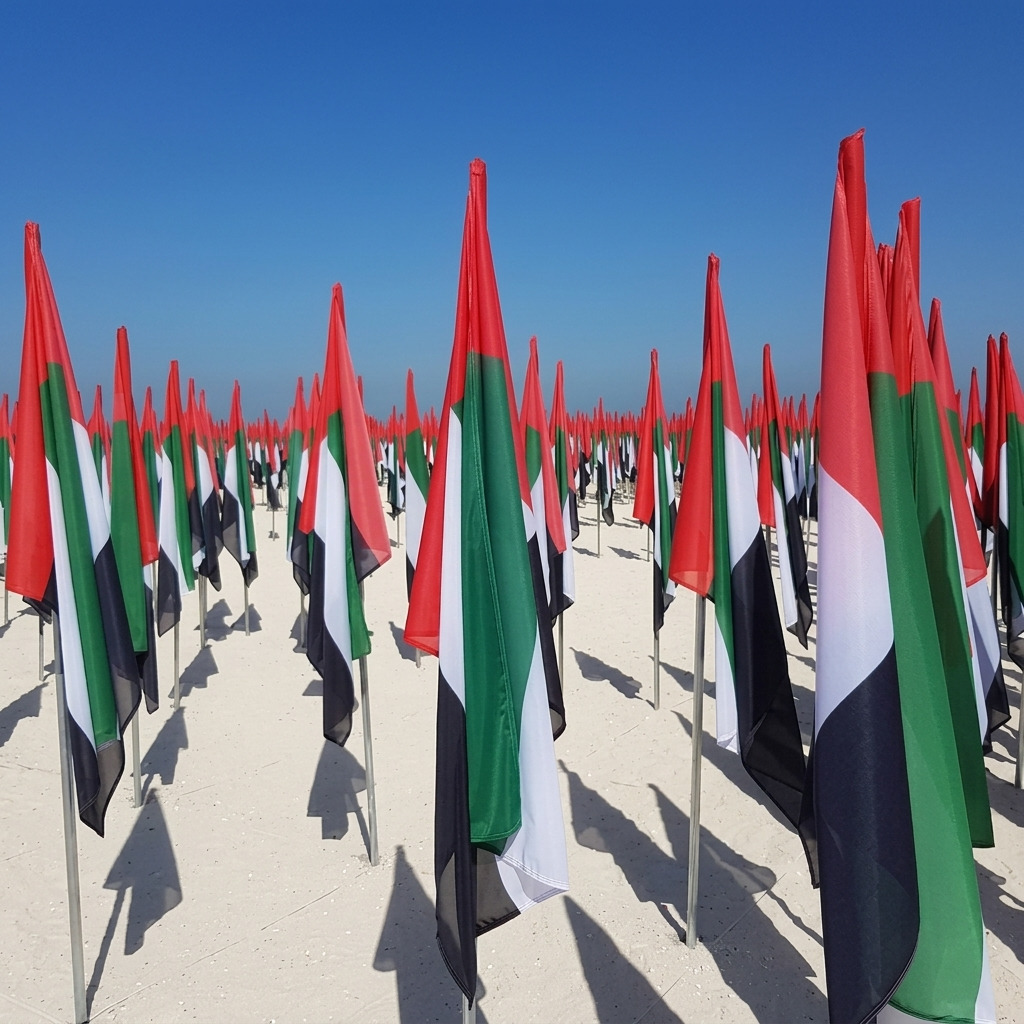
Flags also have an important role during national and cultural occasions. In the UAE, events such as UAE Flag Day create situations where flags are used across public spaces, offices, schools, retail locations, and community activities.
For businesses, the design and use of national symbols should always follow applicable rules and event requirements. The purpose may be ceremonial rather than promotional, so respectful presentation and appropriate placement are important.
This is a good example of why flag design should be considered in relation to the occasion rather than treated as a generic advertising product.
How to Design an Effective Custom Flag
A flag is normally viewed from farther away than a brochure, poster, or printed sign. This means the design needs to communicate quickly.
A practical flag design should consider:
Keep the message short:
Long sentences are difficult to read when a flag is moving or viewed from a distance.
Use recognizable branding:
A logo or simple visual identity can help people identify the organization quickly.
Prioritize contrast:
Text and graphics should remain visible against the background.
Consider both sides:
Depending on the flag construction and printing method, the appearance of graphics from each side may differ.
Think about the viewing angle:
A flag positioned beside a road requires a different design approach from one placed directly beside an exhibition stand.
Placement Can Make a Major Difference
Even a well-designed flag may have limited impact if it is positioned poorly.
Avoid placing flags where buildings, trees, vehicles, or other displays completely block them. At entrances, they can be positioned where visitors naturally look for directions. At outdoor events, several flags can be spaced along a pathway to create a visual route.
Wind conditions should also be considered. Flags need an appropriate base and support system for their location, particularly in outdoor areas.
How Businesses Can Plan a Flag Display
Before ordering custom flags, it helps to define the purpose first. Is the goal to identify an entrance, attract attention to a promotion, support an event theme, or provide directional information?
A local printing reference such as Zahrat Al Madina Printing can be considered when comparing available flag formats and printing requirements for different business or event applications.
From there, the choice of size, shape, fabric, graphics, and support system becomes much easier.
Conclusion
Custom flags are useful because they combine visibility, mobility, and flexible placement. They can support business identification, event organization, exhibition displays, promotional activities, and cultural occasions without requiring permanent installation.
The most effective result comes from matching the flag to its actual environment. A simple design, suitable material, appropriate shape, and visible placement can make a small display element much more useful.
For businesses and event organizers in Dubai, considering viewing distance, weather conditions, placement, and the purpose of the display before printing can help ensure that custom flags remain practical as well as visually effective.